Key Takeaways
- Clarifying your requirements helps you select the best size and feature set for your pickup truck.
- Careful inspection and review of both the truck’s condition and documentation help you spot potential issues early.
- Having a clear understanding of reliable market pricing gives you negotiating power and financial confidence.
- Every step, from test driving to paperwork, contributes to your final purchasing decision.
Table of Contents
- Assess Your Needs
- Inspect the Vehicle
- Review Maintenance Records
- Test Drive
- Check Vehicle History
- Research Market Prices
- Consider Financing Options
- Finalize the Purchase
Purchasing a used pickup truck can be a smart investment that brings utility and value to your daily life or business. When searching for the right vehicle, it is important to dig deeper than just the surface to ensure you drive away with a reliable, long-lasting truck. For those who appreciate enhanced features, exploring options for custom pickup trucks can add a personalized touch to your purchase.
Since pickup trucks come in various forms with differing capacities, features, and histories, understanding the steps to a confident purchase can save you money and headaches. Not only does this require a thorough evaluation of the vehicle, but it also requires careful planning and market research. The more informed you are, the better your chances of finding a solid truck that suits your specific needs.
Unlike new truck shopping, the stakes are different when buying used, especially when considering previous usage and wear. It is crucial to identify how you will use the truck. This lays the foundation for discovering the right balance of size, fuel economy, and capabilities. Your diligence now will ensure the purchase aligns with your expectations both on and off the road.
Assessing key criteria, from maintenance history to market pricing, is central to avoiding expensive repairs down the line. Use these essential tips to embark on your truck search with a well-informed game plan and boost your odds of a successful transaction.
Assess Your Needs
Begin your search by defining how you plan to use the pickup truck. If towing trailers or hauling heavy materials are on your list, focus on full-size trucks that offer higher payload capacities and stronger engines. For everyday commuting, family transportation, or light cargo, a midsize pickup may be more cost-effective and fuel-efficient. Consider important elements such as cab size, towing ratings, bed length, and off-road capabilities. Identifying must-have features, such as four-wheel drive or advanced safety technology, helps narrow down your choices from the start.
Inspect the Vehicle
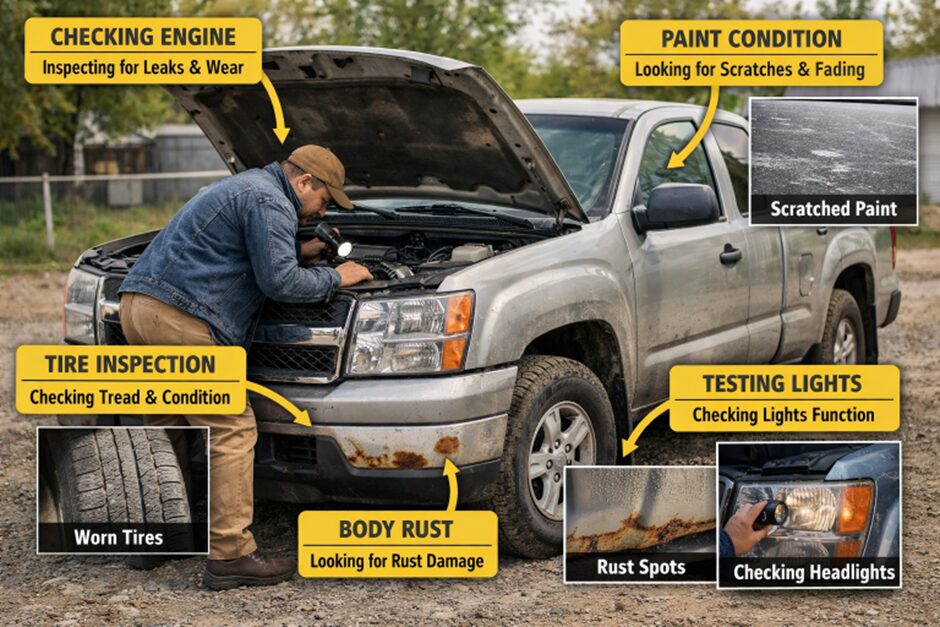
After identifying a truck that fits your needs, conduct a comprehensive inspection. Pop the hood and inspect the engine, look for leaks, excessive dirt, or odd smells. Listen for irregular noises that could signal mechanical problems. Assess the transmission’s condition by ensuring it shifts gears smoothly, both while parked and during a test drive. Inspect the frame for rust or evidence of wreck repairs, especially in areas prone to corrosion. Tires can tell you a lot about how a vehicle has been treated, so check for even wear and plenty of tread. Uneven wear patterns often indicate problems with alignment or suspension components.
Review Maintenance Records
Consistent, thorough maintenance is the hallmark of a pickup truck that will serve you well into the future. Request records detailing oil changes, brake service, fluid replacements, and repairs. Look for documentation from reputable mechanics or service centers. Trucks that lack a clear maintenance trail may hide deferred work or shortcut repairs, both of which can lead to bigger issues later. Whenever in doubt about repairs or work completed, consider a pre-purchase inspection by a trusted, independent mechanic.
Test Drive
The test drive is your chance to experience the truck’s performance firsthand. Start the vehicle from cold, as certain problems are most noticeable before the engine has warmed up. Accelerate and brake firmly to evaluate how the truck handles under stress. Listen for clunks, rattles, and vibrations that might indicate worn suspension parts or poor alignment. If the truck features four-wheel drive, test the system’s engagement and disengagement at low speeds. Also, check cabin comfort and visibility, since these play an important role in long-term satisfaction.
Check Vehicle History
Obtaining a reputable vehicle history report, like those from Carfax or AutoCheck, provides you with critical data on the truck’s past. A history report can reveal previous accidents, flood damage, salvaged or rebuilt titles, and any odometer tampering. This step is essential for uncovering issues that even careful inspections may not detect. Never skip the history report; even if a seller presents their own claims, it is a worthwhile investment for peace of mind.
Research Market Prices
Knowing the fair market value for your chosen pickup truck model is key to avoiding overpayment. Establish a price range by comparing similar vehicles with the same mileage, year, and features. Resources such as the Kelley Blue Book and listings from reputable dealers can provide valuable benchmarks. Studying the local and national market helps you identify pricing trends and gives you the leverage to negotiate for a deal that accurately reflects your truck’s value and condition.
Consider Financing Options
Explore loan pre-approval through banks, credit unions, or online lenders before heading to the dealership or negotiating with a private party. Comparing rates and terms ensures you secure a favorable deal and stay within your budget. Be aware of any additional costs, such as taxes, registration fees, and extended warranties, that may affect your financial planning. Preapproval not only sharpens your negotiating stance but also ensures a smoother purchasing process. For more insights on vehicle financing, you can consult resources from Consumer Reports.
Finalize the Purchase
Once you have settled on a truck and agreed on the price, it is time to handle the final paperwork. Make sure the title is clear, the odometer statement is accurate, and all promised service or warranty agreements are documented in writing. Transfer ownership, register the vehicle, and obtain insurance before driving away. Taking your time at this phase helps you avoid post-sale complications and ensures legal ownership of your new-to-you truck.
By following these guidelines, you will be empowered to make a smart, informed purchase. Whether your ideal pickup is a rugged workhorse or a stylish modern custom, a careful approach will help you enjoy your investment for years to come.