Cranes are the unsung heroes of modern-day construction sites. From towering skyscrapers to sprawling bridges, they play an indispensable role in shaping the world’s infrastructure. But have you ever wondered how this indispensable machinery came to redefine construction projects as we know them? This blog dives into the essential role of cranes in modern infrastructure, exploring their types, applications, evolving technology, and their future in construction.
Introduction to Cranes in Modern Infrastructure
Infrastructure development has rapidly advanced over recent decades, leading to taller buildings, longer bridges, and larger industrial complexes. None of this would be possible without cranes. Acting as the backbone of construction projects, cranes lift, move, and place massive loads with precision, often in environments that reach unimaginable heights or carry immense complexity. These mechanical marvels save time, improve efficiency, and allow architects and engineers to push the boundaries of what’s possible in structural design.
From basic lifting equipment to complex, technology-driven machinery, cranes have evolved significantly over the years. Today, they are integral to modern infrastructure projects, ensuring seamless operations that deliver high-quality results.
Types of Cranes and Their Applications
Not all cranes are created equal, and choosing the right one can make or break a construction project. Each type of crane serves specific purposes, ensuring that even the most complex tasks are carried out efficiently. Here are some of the most common types of cranes used in modern construction:
1. Tower Cranes
Tower cranes are iconic in urban environments, especially in projects that involve constructing high-rise buildings. These cranes are fixed to the ground (or attached to the structure) and can stretch sky-high, carrying heavy loads with ease. Their ability to work at great heights makes them essential for projects where vertical reach is key.
2. Mobile Cranes
Mobile cranes provide unmatched versatility. Mounted on a wheeled chassis, these cranes are easily transported between project sites. They’re perfect for jobs requiring quick setup and multi-location operations.
3. All-Terrain Cranes
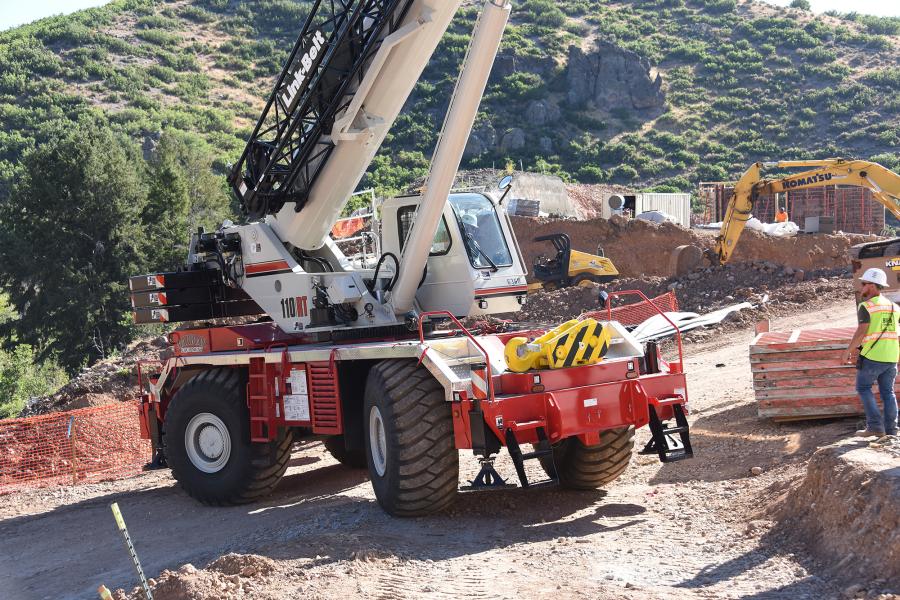
Combining functionality and mobility, all-terrain cranes, like those in Utah, are designed to travel efficiently on both rough terrain and highways. Their advanced features make them suitable for large-scale projects in remote locations, such as wind farms or bridge installations.
4. Overhead Cranes
Primarily used indoors, overhead cranes are common in factories and warehouses. They travel on rails attached to the ceiling, making them perfect for moving heavy loads over large distances.
5. Crawler Cranes
With their durable tracked chassis, crawler cranes are ideal for heavy-duty construction tasks in challenging environments. Their stability and lifting capacity make them a popular choice for infrastructure projects like dams and power plants.
Each crane type serves a unique purpose, and its application ultimately depends on the project requirements. However, cranes share one common objective—to simplify and elevate (literally) construction tasks.
Importance of Cranes in Construction Projects
Cranes are the linchpins of construction projects, seamlessly integrating into every stage of the building process. But what makes them so important?
- Efficiency
Cranes eliminate the need for manual lifting, speeding up construction timelines. They save countless hours of labor, enabling projects to remain on schedule.
- Precision
Modern cranes come equipped with advanced features, allowing operators to position materials with pinpoint accuracy. This precision is especially critical in complex projects like power plants or long-span bridges.
- Cost-Effectiveness
While cranes represent a significant initial investment, their ability to complete tasks quickly offsets costs. They reduce labor requirements and minimize the downtime typically associated with large-scale projects.
- Versatility
From residential buildings to industrial structures, cranes can adapt to a wide range of applications, making them indispensable in infrastructure development.
Technological Advancements in Crane Operation
The construction industry is undergoing a technological revolution, and cranes are no exception. Modern cranes are more advanced than ever, pushing the boundaries of efficiency and precision. Here are a few technological advancements redefining crane operations:
1. Smart Controls and Automation
Advancements in automation and IoT (Internet of Things) have enabled cranes to operate with minimal human intervention. Smart systems ensure smoother movements, reduced errors, and better safety controls, making operations safer and more reliable.
2. Remote Operation
Remote crane operation technology allows operators to control machinery from a safe distance. This not only minimizes exposure to hazardous environments but also improves precision by allowing real-time monitoring using advanced cameras and sensors.
3. Load Monitoring Systems
Sensors and load monitoring systems integrated into cranes provide critical information about weights and capacities. This eliminates guesswork, ensuring that the machinery operates within its limits.
4. Energy Efficiency
Modern cranes are now equipped with energy-efficient mechanisms that reduce fuel consumption and environmental impact. Hydraulic systems and electric motors are commonly used to make cranes eco-friendly.
The integration of these technologies ensures that modern cranes remain at the forefront of innovation in construction.
Safety Measures and Regulations
Operating cranes requires adhering to strict safety protocols and regulations to prevent accidents. Considering the sheer size and lifting capacity of cranes, safety is always a top priority on construction sites. Here are a few key measures that ensure safety in crane operations:
- Thorough Training
Operators must undergo rigorous training to become certified in crane operation. This reduces the risk of accidents caused by human error.
- Regular Inspections
Routine checks for structural integrity, mechanical systems, and load-bearing components are essential for safe crane operations.
- On-Site Safety Guidelines
Construction sites implement strict safety protocols, including designated work zones, personal protective equipment (PPE) requirements, and signaler guidance.
- Compliance with Standards
Regulatory bodies like OSHA in the United States enforce strict standards for crane operations. Adherence to these rules ensures a safe working environment for everyone involved.
Conclusion
It’s impossible to imagine modern infrastructure projects without cranes. Whether it’s laying the foundation for a residential project or constructing an engineering marvel like a suspension bridge, cranes are the silent workhorses behind the scenes. Their adaptability, enhanced by cutting-edge technology, continues to empower industries to achieve feats once thought impossible.

