Why Solar Panel Wiring Matters
When setting up a solar power system, one of the most important things to decide is how to connect your solar panels. You can wire them in series or in parallel and this choice will affect how much power your system can produce.Whether you’re building a solar setup for your home, an RV, or a backup generator, understanding these two types of connections will help you get the most out of your solar investment.In this guide, we’ll explain both series and parallel connections in simple terms, share the pros and cons of each, and help you decide which one is best for your setup.
What Is Series Wiring?
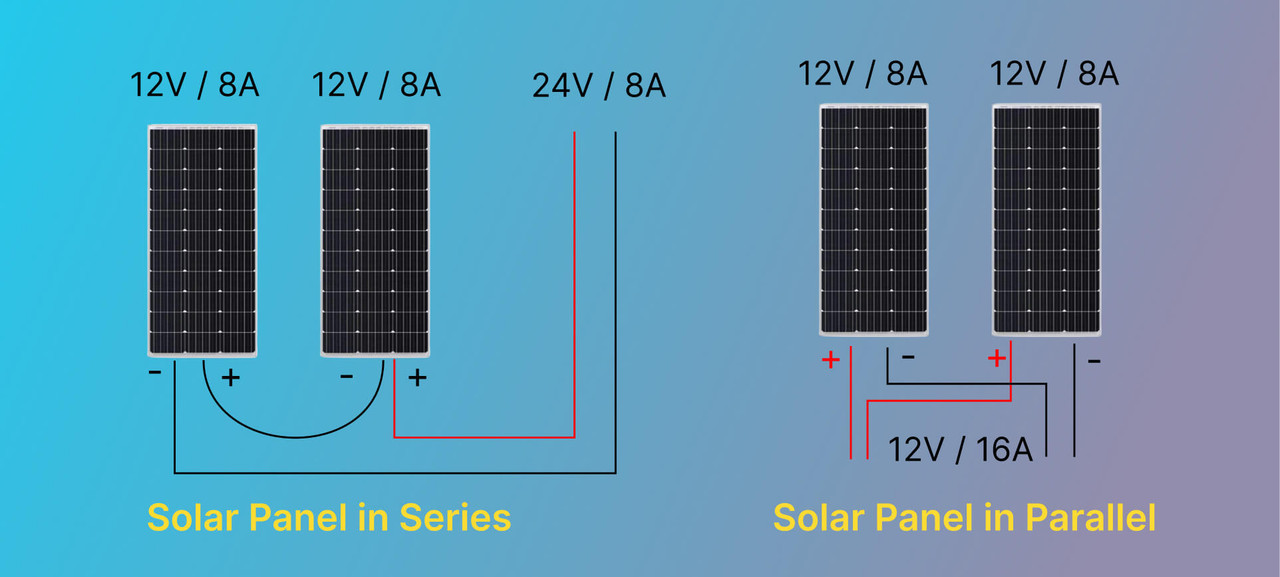
Wiring solar panels in series means connecting them one after another—just like batteries in a flashlight. You connect the positive end of one panel to the negative end of the next.
Key Points:
- Voltage increases: Add the voltage of each panel together.
- Current stays the same: The current remains the same as just one panel.
Example: Three 12V panels in series = 36V total (but the same current as one panel).
Pros of Series Wiring:
- Great for systems that need higher voltage (like many inverters).
- Better for long cable runs—less power lost along the wires.
- Often works well with modern solar charge controllers.
Cons of Series Wiring:
- If one panel is shaded or damaged, it can lower the power of the whole string.
- All panels need to be the same type and rating for best performance.
What Is Parallel Wiring?
In parallel wiring, you connect all the positive terminals together, and all the negative terminals together. This setup keeps the voltage the same but increases the total current.
Key Points:
- Current increases: Add up the current from each panel.
- Voltage stays the same: Matches the voltage of one panel.
Example: Three 12V panels in parallel = 12V total (but triple the current).
Pros of Parallel Wiring:
- Keeps system voltage low, which is perfect for 12V or 24V battery banks.
- If one panel is shaded, the others still work fine.
- Easier to expand your system just add more panels.
Cons of Parallel Wiring:
- You need thicker cables to handle the higher current.
- Long cables can lose more power if not properly sized.
Series vs. Parallel: How to Choose?
Your decision depends on how your system is designed and what your energy needs are.
Go with Series Wiring if:
- You need a higher voltage for your inverter or charge controller.
- You have long cable runs and want to reduce energy loss.
- All your panels get even sunlight and are the same type.
Choose Parallel Wiring if:
- You’re using a low-voltage battery bank (like 12V or 24V).
- You want better performance when some panels are shaded.
- You plan to add more panels later.
Can You Combine solar panel series vs parallel?
Yes! You can mix both methods to get the best of both worlds.
For example, you can connect a few panels in series to raise the voltage, then connect those series groups in parallel to boost the current. This is called a hybrid setup, and it’s great for larger solar systems.
Smart Tips for Safe Solar Wiring
- Use wires that can handle your system’s maximum voltage and current.
- Always install fuses or breakers for safety.
- Make sure your panels are well-matched in voltage and current.
- Keep connectors clean and tight to avoid power loss.
- For complex setups, it’s best to consult a professional.
How Anker SOLIX Makes Solar Simple
At Anker SOLIX, we design solar products that are easy to use, powerful, and built to last. Whether you’re wiring in series, parallel, or both, our solar generators and panels are made to work seamlessly in any configuration.
We take the guesswork out of solar power, helping you build a system that’s safe, reliable, and ready when you need it.Check out our blog for more tips, or explore our product collection to find your perfect solar setup.
Final Thoughts: Get the Most Out of Your Solar Panels
Understanding the difference between series and parallel wiring is key to setting up an efficient solar system. Each option has its own benefits depending on what you’re powering, how much space you have, and how much sunlight your panels get.By choosing the right connection style or combining both you can make sure your system gives you the clean energy you need, whenever and wherever you need it.