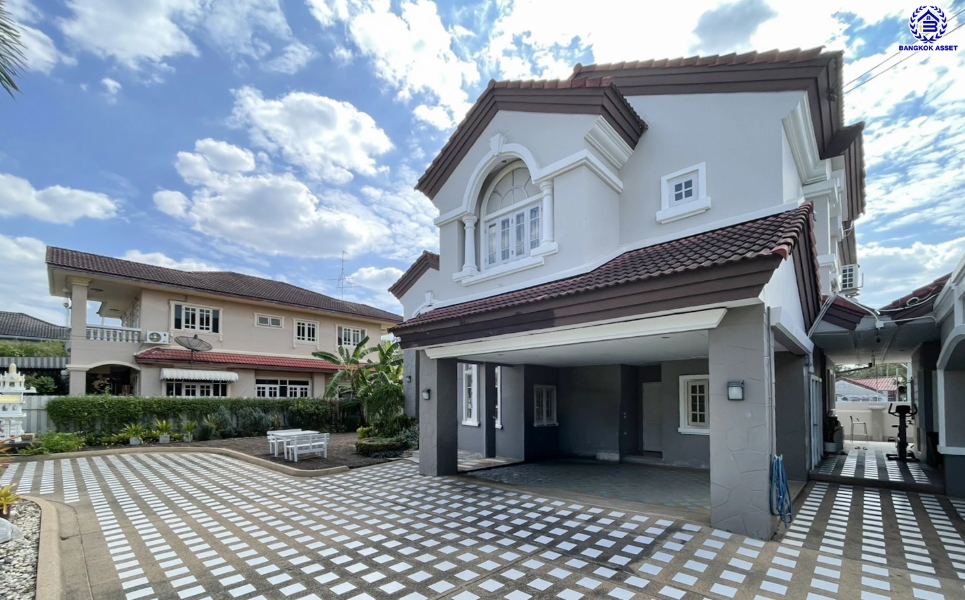
A residential estate ages much like a building: some qualities mature, while systems and shared infrastructure begin to demand closer attention. The evidence usually appears across several small observations rather than inside one decisive label.
The choice becomes more manageable when one concern stays visible: the lifecycle of roads, drainage, landscaping, management, and individual houses. Broad preferences can then be turned into questions that are testable during a visit.
Read the estate’s physical lifecycle
The comparison stays grounded in a concrete concern: the lifecycle of roads, drainage, landscaping, management, and individual houses. Observe roads, drains, lighting, planting, facilities, and management practices, separating normal maturity from deterioration that has been repeatedly deferred. A second visit at a contrasting hour can reveal whether the first impression was typical or unusually favorable. Give the feature a clear role in the decision instead of letting it influence the shortlist through an undefined impression.
Roads, drainage and utilities
Test the journey in both directions and notice the weakest segment, since a short rail ride can be undermined by an awkward first or last connection. One practical concern sits behind that test: the lifecycle of roads, drainage, landscaping, management, and individual houses. Where the consequence is significant, return with the relevant household member rather than relying on a secondhand description. Fixed constraints deserve more attention than finishes because structure, access, and location are harder to alter later.
Trees, facilities and common areas
Uncertainty does not automatically disqualify a home, but it should be identified before it is allowed to disappear inside enthusiasm. Compare the convenience of shared management with the reduced freedom that accompanies decisions made collectively. The household’s underlying priority remains clear: the lifecycle of roads, drainage, landscaping, management, and individual houses. Compare the inconvenience over a full week; repetition can turn a minor irritation into an important ownership issue.
Compare renovation and management expectations
Look for evidence rather than reassurance: consistent finishes, accessible service points, repair records, moisture patterns, and issues that warrant a qualified inspection. The strongest observation links a physical feature to a specific consequence for privacy, time, upkeep, or flexibility. Give the feature a clear role in the decision instead of letting it influence the shortlist through an undefined impression. That evidence speaks directly to the larger issue: the lifecycle of roads, drainage, landscaping, management, and individual houses.
Examples in pre-owned detached houses in Nonthaburi can help translate these considerations into concrete questions about layout, access, condition, and responsibility before arranging a visit.
Match lifecycle trade-offs to buyer priorities
The trade-off becomes clearer when stated beside the main concern: the lifecycle of roads, drainage, landscaping, management, and individual houses. A mature community may offer established routines and shade, while a newer one may still be revealing how shared systems perform under regular use. An attractive benefit becomes easier to judge once its recurring cost in effort or coordination is stated plainly. Where the consequence is significant, return with the relevant household member rather than relying on a secondhand description.
Some attractive qualities can be recreated later through furniture, finishes, or landscaping; others are tied to structure, plot position, access, or collective rules. Giving the harder-to-change conditions more weight creates a more durable comparison. It also brings attention back to the central concern: the lifecycle of roads, drainage, landscaping, management, and individual houses.
Maturity Requires Evidence of Stewardship
The clearest judgment is expressed in the language of daily life: what becomes easier, what requires effort, and what remains uncertain. Age should not be treated as a verdict. It is a prompt to ask what has matured well and what will require stewardship.
