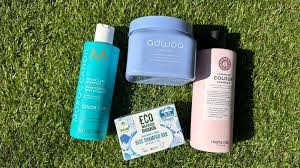
Okay real talk. You leave the salon and everything is perfect. The color is rich, it catches light the right way, strangers compliment you at Trader Joe’s. Life is good. Then you wash your hair maybe five or six times and suddenly you’re looking at a version of that color that nobody asked for. Muddy. Brassy. Just… off.
And the kneejerk reaction is always the same. “My colorist messed up.” Nah. Probably not. What’s actually happening is your shampoo and your color safe conditioner are in a fight with each other, and your hair color is losing. I know that sounds dramatic but stick with me here because this is the stuff nobody tells you at checkout when you’re booking your next appointment.
These Two Bottles Need To Get Along
Quick nerdy bit and then we’ll move on.
Your hair has layers. The outside layer, the cuticle, works kind of like roof shingles. Overlapping, protective, keeps the good stuff in. Color molecules? They live underneath that layer. Every single wash forces those shingles to lift a little so water and cleanser can get in there and do their job. Fine. Normal. No big deal.
Except sulfate shampoos don’t lift gently. They pry those shingles open like someone using a crowbar on a window. Color pours out. Gone forever. And then you reach for your top color safe conditioner expecting it to save the day. But the damage already happened, you know? That conditioner is doing its best to smooth things over but it can’t put color back that already rinsed down your drain. Impossible ask.
Now. Swap that harsh shampoo for a sulfate-free one and suddenly your conditioner isn’t playing defense anymore. Both products are actually protecting. Cosmetic chemists (the people who formulate this stuff for a living) have data showing sulfate-free combos reduce color fade by close to 50%. Fifty percent. That’s not some minor improvement. We’re talking potentially doubling how long your color looks fresh.
“Color Safe” On The Label Doesn’t Always Mean Much
Pet peeve time. Walk down any drugstore hair aisle and count how many bottles say “color safe” or “color protect” on them. It’s basically all of them now. Marketing teams figured out that phrase moves product off shelves.
But a color safe conditioner that actually does what it promises? That’s more specific. It needs to seal the cuticle after washing. It needs to hydrate without leaving heavy gunk behind. And it can’t contain the ingredients that quietly mess with dye bonds. Parabens, cheap alcohols, heavy silicone stacks. All bad news for treated hair even though they show up in products that claim otherwise.
What you actually want on that ingredient list. Hydrolyzed quinoa protein. Sunflower seed extract. Vitamin E. Not because they’re trendy health food buzzwords but because they legitimately block UV damage and thermal breakdown of color molecules. There’s real science behind these, not just packaging hype.
Matching Your Products To Your Actual Color Type
- Vivid and fashion colors. These are the high-maintenance ones. Cherry reds, electric blues, that gorgeous purple your friend had for her birthday. Semi-permanent pigments sitting right near the surface of the hair. They bail at the first sign of a strong cleanser. Your best bet is a co-wash or micellar shampoo, barely any lather, paired with a deeply moisturizing color safe conditioner. If it foams up like a car wash, put it back on the shelf.
- Highlights and balayage. Brassiness is the enemy here more than outright fading. Grab a purple or blue-toned shampoo for once a week duty. Rest of the time, sulfate-free all the way. Your conditioner should lean heavy on bond repair because bleached hair is structurally compromised even when it looks healthy from the outside. It’s basically been through a chemical negotiation and needs ongoing support.
- Brunettes and redheads. A shade-matched depositing shampoo paired with a good lightweight color safe conditioner is the move here. Especially for reds. Red pigment molecules are physically tinier than brown or blonde ones. They slip out of the hair shaft faster. Every redhead reading this just nodded because you’ve watched it happen in real time. Week one gorgeous. Week three copper-ish. Week five just sad.
- Gray coverage. Volumizing shampoo is tempting because gray hair can feel flat. But those formulas intentionally rough up the cuticle to create body. For color-treated gray hair that’s the worst possible trade-off. Go smoothing shampoo, rich conditioner. Volume isn’t worth the fade.
Conclusion
Color services aren’t cheap. Average single-process in the US runs about $150 these days. Full highlights can push $350 depending on your city and your stylist. That’s real money disappearing every time the wrong product combo accelerates your fade timeline.
Two bottles. That’s all this takes. A shampoo that cleanses gently and a conditioner that seals and restores. Both formulated around keeping color in. Not glamorous. Not complicated. Just intentional.
Because honestly? The cheapest shampoo on the shelf is never actually the cheapest option. Not when it’s the reason you’re back in the salon chair three weeks early dropping another $200.