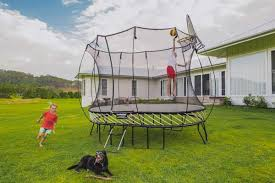
Trampolines are more than just a fun backyard toy; they’re a great way to get kids (and even adults!) moving, laughing, and spending time outdoors. Whether it’s bouncing for fun, practicing flips, or getting some exercise, a trampoline can bring hours of joy to your family.
But before you jump into buying one, there are some important things to think about. Not all trampolines are created equal, and choosing the right one can make the difference between years of safe fun and a big mistake.
In this guide, we’ll cover the 10 things you should consider before buying a trampoline for your family.
1. Size of the Trampoline and Your Yard
The first thing to consider is space. Trampolines come in many sizes, from small indoor ones (about 36 inches) to huge outdoor models (up to 16 feet or more).
Ask yourself:
- How big is your yard?
- Do you have a flat, safe space to set it up?
- Will there still be room for kids to run and play around it?
As a rule, you’ll want at least 3-5 feet of clear space around the trampoline and no low-hanging trees or power lines above it.
2. Shape of the Trampoline
Most people think of trampolines as round, but you can actually choose between several shapes:
- Round trampolines – Most common, great for backyard fun, bounce directs toward the center.
- Rectangular trampolines – Provide a stronger bounce, often used for gymnastics and tricks.
- Square trampolines – A mix of both, giving more jumping space than a round.
- Oval trampolines – Good option if you want a larger jumping area but don’t have space for a rectangle.
If your family wants simple fun, a round trampoline is perfect. If your kids are into flips or sports, a rectangular trampoline may be better.
3. Weight Limit
Not all trampolines can hold the same weight. Some small models are designed for kids only, while larger heavy-duty ones can handle adults too.
Check the maximum weight capacity before buying. A good family-size trampoline usually supports 200–400 pounds, making it safe for multiple kids (or a parent joining in).
4. Safety Features
Safety should always be a top priority when buying a trampoline. Look for:
- Safety enclosure net – Prevents kids from falling off.
- Padding over springs – Protects from injuries.
- Soft edges or spring-free designs – Reduce the risk of accidents.
- Sturdy ladder – Makes it easier for kids to climb on safely.
Investing in a trampoline with good safety features gives you peace of mind while your kids are having fun.
5. Age of Your Kids
Trampolines aren’t “one-size-fits-all” when it comes to kids’ ages.
- Toddlers and small kids – Mini indoor trampolines (with handles) are best.
- School-age kids (6–12 years) – Round outdoor trampolines with nets work great.
- Teens & adults – Heavy-duty rectangular or large trampolines are better.
Always choose a trampoline that matches your child’s age and abilities.
6. Quality and Durability
You don’t want a trampoline that falls apart after one season. Look at:
- Frame material – Strong steel that’s rust-resistant lasts longer.
- Springs – High-quality springs give a better bounce and won’t break easily.
- Mat material – Should be UV-resistant to withstand sun exposure.
Cheaper trampolines may save money upfront, but often wear out faster. Investing in quality means more years of safe fun.
7. Weather Resistance
Since your trampoline will likely live outdoors, it needs to handle the weather. Look for:
- Rust-proof frames
- UV-protected mats and nets
- All-weather padding
You can also buy a trampoline cover to protect it from rain and snow, keeping it in good shape for longer.
8. Assembly and Portability
Some trampolines are easier to set up than others. Check if the trampoline comes with clear instructions (or if professional installation is available).
Also, consider if you’ll ever need to move it. Some trampolines are very heavy and not easy to shift around. A lighter model may be better if you plan on moving it often.
9. Budget and Price
Trampolines come in all price ranges, from $100 mini trampolines to $2,000+ professional-grade trampolines.
When comparing trampolines for sale, keep in mind:
- Cheaper ones may not last as long.
- Mid-range trampolines often offer the best balance of safety and value.
- High-end trampolines (like spring-free models) cost more but provide top safety.
Decide on your budget, but don’t compromise on safety features.
10. Warranty and Customer Support
A trampoline is an investment, and you’ll want support if something goes wrong. Look for brands that offer:
- At least 1–3 years warranty on the frame
- Replacement parts like nets, mats, and springs
- Good customer support for repairs or questions
A strong warranty shows the company stands behind its product.
Final Thoughts
A trampoline can be one of the best purchases for your family, gets kids outdoors, encourages exercise, and creates endless memories. But before buying, take time to think about safety, size, shape, durability, and your kids’ needs.
Whether you’re browsing trampolines for sale online or checking out options in-store, keeping these 10 factors in mind will help you make the best choice.
Invest in the right trampoline, and you’ll give your family years of fun and healthy activity right in your own backyard.
FAQs About Buying a Trampoline
1. What size trampoline is best for a family?
A 12–14-foot trampoline is usually the best choice for most families. It gives enough room for kids to bounce safely without taking up the whole yard.
2. Are trampolines safe for kids?
Yes, as long as you choose one with safety features like a net, padding, and proper weight limits. Always supervise children while they bounce.
3. How long do trampolines last?
A good-quality trampoline can last 5–10 years, especially if it’s well-maintained and covered during bad weather.
4. Should adults use trampolines?
Absolutely! Many trampolines are designed for both kids and adults. Just check the weight limit before bouncing.
5. Where can I find the best trampolines for sale?
You can find trampolines for sale at local sporting goods stores, large retailers, or trusted online shops. Compare safety features, prices, and warranties before buying.
