Power over Ethernet has spent decades in the background, quietly supporting enterprise connectivity while flashier technologies grabbed the headlines. That is about to change. By 2030, PoE will be a foundational layer of enterprise infrastructure, not just a convenient way to avoid running separate power cables to IP phones. Higher wattage standards, smarter management tools, and a wave of power-hungry connected devices are converging to push PoE into a new era. The PoE Enterprise Future will center on intelligent, resilient, and highly scalable infrastructure designed to support everything from Wi-Fi 7 to industrial IoT.Here is what enterprise IT teams need to understand.
Higher Power Standards Are Moving from Niche to Normal
For years, the 802.3af standard (15.4W per port) and its successor 802.3at (30W) covered most enterprise needs. That ceiling is cracking. The 802.3bt standard, also known as PoE++ or Type 3/4, delivers 60-90 watts per port and is on track to become standard across enterprise environments by the end of the decade.
The reason is simple: connected devices are getting hungrier, requiring substantially more power than they did before. Wi-Fi 7 access points typically require 30-60 watts for full multi-radio performance. PTZ security cameras, digital signage displays, thin clients, and IoT gateways all push past what older standards can reliably deliver. Proprietary extensions like Cisco’s Universal Power over Ethernet (UPoE), will coexist with 802.3bt in some environments, but the broad trend is toward standards-based higher-power switching.
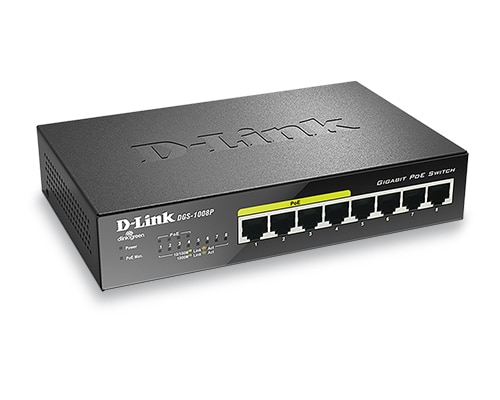
Enterprises that refresh their switching infrastructure now should prioritize PoE++ compatibility to avoid a second upgrade cycle within a few years. Switches like the Versatek C60-244-30-600U, a managed 24-port Gigabit PoE switch with battery backup, are representative of the shift toward resilient, higher-capacity PoE platforms that combine uptime assurance with modern power delivery.
Wi-Fi 7 and Multi-Gigabit Ethernet Are Raising Infrastructure Demands
Wi-Fi 7 is not just faster than its predecessor. It also fundamentally changes the economics of the access layer. Because Wi-Fi 7 access points (APs) use multiple radios simultaneously to achieve higher throughput and lower latency, they require more uplink bandwidth and higher PoE power from the PoE source.
That combination is pushing switch vendors to pair multi-gigabit Ethernet ports (2.5G, 5G, and 10GBASE-T via 802.3bz) with full PoE budgets on those same ports. The goal is to eliminate the mismatch where a high-speed uplink is bottlenecked by insufficient power. Expect the 60W-plus PoE port paired with a multi-gig uplink to become a standard access-layer building block well before 2030.
Private 5G deployments are creating new PoE demand beyond campuses and offices. Factories, logistics hubs, and large retail environments increasingly rely on PoE-powered small cells, edge sensors, and hybrid wireless infrastructure to simplify deployment and reduce operational complexity.
Smart Buildings and IoT Are Fueling Rapid PoE Expansion
One of the most rapidly expanding areas within the PoE enterprise future is smart building infrastructure.
PoE lighting is one of the fastest-growing segments in the commercial building space. PoE-powered LED lighting systems continue gaining traction because they allow facilities teams to consolidate lighting, sensors, controls, and analytics onto a single IP-based infrastructure layer.
Building automation systems that once required separate wiring runs for HVAC controls, access panels, and environmental sensors are increasingly converging on PoE. Security cameras, door controllers, VoIP handsets, and digital directories all run on the same cabling plant.
For enterprises chasing sustainability targets, the ability to monitor and manage power consumption at the port level is a meaningful operational advantage.
This is also where PoE intersects with broader ESG commitments. Consolidated infrastructure reduces material use, simplifies maintenance, and provides energy managers with the granular data they need to optimize consumption.
AI-Driven Management Is Coming to the Access Layer
Network management for PoE has historically been reactive: a device fails to power on, IT staff manually investigate the issue, and a port gets reset. That model does not scale in a high-density environment where hundreds of devices draw power around the clock.
AIOps platforms are beginning to address this by monitoring PoE budgets in real time, flagging anomalies before they become outages, and dynamically prioritizing power allocation based on policy. If a switch approaches its total power budget during peak hours, the system can deprioritize lower-priority devices automatically rather than dropping critical infrastructure.
Complementary features like perpetual PoE (which maintains power to connected devices during a switch reboot) and fast PoE (which delivers power before the switch fully boots) are also becoming standard expectations rather than premium add-ons. For environments where uptime matters, such as healthcare facilities, transportation hubs, or manufacturing floors, these capabilities are quickly moving from nice-to-have to required.
The Infrastructure Challenges Enterprises Need to Address
Higher power standards introduce real engineering considerations.
Power Budget Planning
Power budget constraints are the most immediate. A 24-port switch rated at 90W per port would theoretically require over 2,000W of PoE capacity. Real-world deployments are more manageable because not all ports operate at maximum load simultaneously, but budget planning still requires careful attention to peak-demand scenarios.
Cabling Requirements
Cabling is another factor. Cat6 or Cat6A is recommended for 802.3bt deployments to minimize voltage drop, particularly over longer cable runs. Older Cat5e infrastructure can create performance and reliability issues at higher power levels. Midspan injectors and PoE extenders can bridge the gap in some situations, but organizations planning major device refreshes should factor in cabling upgrades as part of the overall project scope.
Thermal Management
Heat dissipation increases with power delivery, affecting switch placement and cooling requirements in wiring closets. Modern chipsets are more efficient than their predecessors, but thermal planning still matters in dense deployments. And as always, mixing legacy and current-generation PoE devices requires careful compatibility checks during transitions.
The Broader Enterprise Context: NaaS, Industrial OT, and Edge Fabric
The PoE enterprise future extends well beyond office environments. PoE is showing up in places it has historically not reached. Network-as-a-Service (NaaS) models are beginning to include PoE-managed services with consumption-based pricing, lowering the capital barrier for organizations that want modern switching capabilities without large upfront hardware investments.
In industrial and operational technology environments, ruggedized PoE switches designed for temperature extremes, vibration, and harsh electrical conditions are being deployed on manufacturing floors and in outdoor settings. Private 5G backhaul in these environments frequently relies on PoE-powered small cells, creating a feedback loop between wireless evolution and PoE adoption.
At the edge of SD-WAN and SASE architectures, PoE-capable switching is becoming part of the standard branch office stack, powering the sensors, cameras, and access points that make distributed sites functional.
As edge computing continues expanding, PoE infrastructure will become increasingly important for supporting distributed intelligence and real-time analytics closer to the source of data generation.
Preparing for the PoE Enterprise Future
Organizations that treat the next switch refresh as a PoE strategy decision will be better positioned for the infrastructure demands of 2030. The core priorities are consistent: source switches with substantial PoE budgets, multi-gigabit port options, and management platforms that provide per-port visibility. Confirm that cabling plants can support higher power standards, and plan device refreshes around 802.3bt compatibility rather than older ratings.
The sectors moving fastest are those with the heaviest wireless and IoT footprints: higher education campuses, corporate offices, healthcare systems, retail chains, and manufacturers. But the underlying technology shift is broader.
By 2030, PoE will not be viewed as an optional switch feature that appears on a spec sheet as a selling point. It will be the expected foundation for any serious enterprise access layer supporting wireless connectivity, IoT expansion, AI-driven operations, and intelligent infrastructure management.
To learn more about the key trends and changes coming to PoE, contact the VERSA Technology experts.https://versatek.com/https://versatek.com/PoE