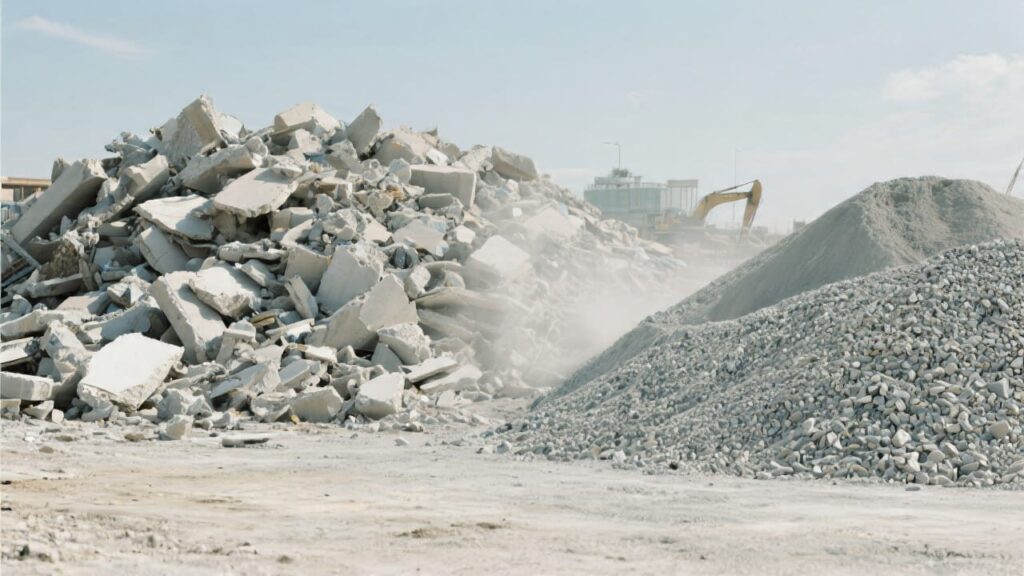
For many contractors, concrete waste is treated as an unavoidable expense – something to load, haul, and dump as quickly as possible. But that mindset is changing. With rising disposal fees and tighter margins, more companies are rethinking how they handle debris. Instead of paying to get rid of it, they’re using modern recycling equipment to turn waste into a resource. The real question is no longer convenience – it’s economics. When you compare concrete recycling vs landfill cost, the difference can be substantial.
This article breaks down the true costs of both options and helps you understand which approach delivers better long-term value.
The Traditional Approach: Landfill Disposal
For decades, the standard process has been simple: remove concrete from the site, transport it to a landfill, and pay the required fees. While straightforward, this method comes with several hidden costs.
Key cost components:
- Transportation (fuel, trucks, labor)
- Time spent loading and hauling
- Landfill tipping fees
- Project delays due to logistics
At first glance, landfill disposal may seem like the easier option. However, a deeper look at the construction waste disposal cost comparison reveals that convenience often comes at a premium.
Understanding Landfill Tipping Fees
One of the biggest cost drivers in disposal is landfill pricing. Landfill tipping fees construction waste vary by region but are consistently rising due to environmental regulations and limited landfill space.
What affects tipping fees?
- Location and local regulations
- Type of material (clean vs mixed debris)
- Volume and weight
- Demand for landfill capacity
In many urban areas, tipping fees can quickly turn into one of the largest line items in your project budget.
The Alternative: Concrete Recycling
Concrete recycling flips the traditional model. Instead of treating debris as waste, it treats it as a reusable asset.
By processing material on-site or nearby, contractors can avoid disposal costs and generate usable aggregate for construction.
This approach directly addresses the question of cost of dumping concrete vs recycling, and in most cases, recycling comes out ahead.
Breaking Down the Costs: Recycling vs Disposal
To truly understand the financial impact, let’s compare both approaches side by side.
Landfill disposal costs:
- Hauling (multiple trips required)
- Fuel and labor expenses
- Tipping fees per ton
- Downtime while waiting for trucks
Concrete recycling costs:
- Equipment operation (fuel or electricity)
- Initial setup or rental cost
- Basic maintenance
- Labor for processing
While recycling has an upfront cost, it eliminates or significantly reduces several ongoing expenses tied to disposal.
Where Recycling Saves the Most Money
The biggest advantage of recycling is not just cost reduction – it’s cost transformation.
1. Eliminating tipping fees
Every ton of concrete you recycle is a ton you don’t pay to dump.
2. Reducing hauling expenses
Fewer truck trips mean lower fuel costs and less reliance on drivers.
3. Replacing purchased materials
Recycled aggregate can be reused on-site, reducing the need to buy new material.
4. Creating resale opportunities
Excess material can be sold, turning waste into revenue.
This is why many contractors see save money recycling concrete on site as more than just a claim – it becomes a measurable business advantage.
Time Is Money: The Hidden Cost Factor
Beyond direct expenses, time plays a major role in project profitability.
Landfill approach:
- Waiting for trucks
- Scheduling delays
- Slower site turnover
Recycling approach:
- Continuous processing
- Immediate reuse of material
- Faster project completion
Time savings often translate into lower labor costs and the ability to take on more projects.
Real-World Scenario: A Cost Comparison
Let’s consider a simplified example.
Project generates:
- 1,000 tons of concrete debris
Landfill option:
- Hauling cost per ton
- Tipping fee per ton
- Multiple truck trips
Recycling option:
- Equipment cost spread across project
- Minimal hauling
- Material reused on-site
In many cases, the concrete recycling vs landfill cost difference can reach tens of thousands of dollars on a single project, especially in regions with high disposal fees.
Environmental and Regulatory Impact
While cost is the primary driver, environmental factors are becoming increasingly important.
Recycling benefits:
- Reduces landfill usage
- Lowers carbon emissions from transport
- Conserves natural resources
- Supports sustainable construction practices
Many municipalities now encourage or even require recycling, making it a key part of modern construction waste disposal cost comparison strategies.
When Landfill Disposal Still Makes Sense
Despite the advantages of recycling, there are situations where landfill disposal may still be the better option.
Examples include:
- Very small projects with limited debris
- Highly contaminated materials
- Jobsites with no space for equipment
- One-time projects without repeat volume
In these cases, the logistics of recycling may outweigh the benefits.
When Recycling Becomes the Clear Winner
Recycling delivers the most value when:
- Projects generate large volumes of concrete
- Disposal costs are high
- Material can be reused on-site
- Contractors handle frequent demolition work
For these businesses, the shift from disposal to recycling can significantly improve margins.
Choosing the Right Strategy for Your Business
Deciding between landfill disposal and recycling comes down to evaluating your workflow and long-term goals.
Ask yourself:
- How often do I deal with concrete waste?
- What are my current disposal costs?
- Can I reuse material on future projects?
- Do I have access to the right equipment?
Answering these questions will help you determine the most cost-effective approach.
The Bigger Picture: Turning Cost Into Opportunity
The construction industry is evolving. What was once considered waste is now recognized as a valuable resource.
By rethinking how you handle debris, you can move beyond simply managing costs and start creating new opportunities.
The shift from dumping to recycling is not just about saving money – it’s about building a more efficient and resilient business model.
Final Thoughts
The comparison between concrete recycling vs landfill cost is clear: while landfill disposal may seem easier in the short term, it often comes with higher long-term expenses.
Recycling, on the other hand, offers a smarter alternative – one that reduces costs, improves efficiency, and opens the door to new revenue streams.
As tipping fees continue to rise and sustainability becomes a priority, more contractors are choosing to recycle rather than dump.
If you’re still relying on traditional disposal methods, now is the time to take a closer look. The numbers may surprise you.