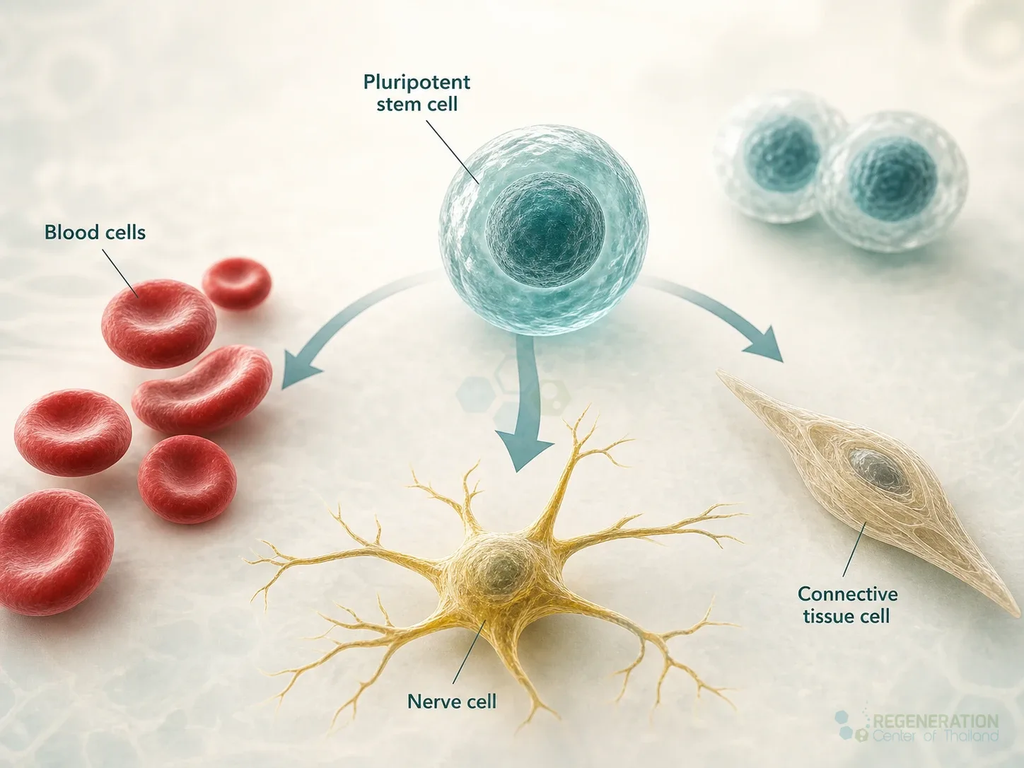
Stem cells are among the most important areas of modern medical research. These unique cells have the ability to renew themselves and, depending on their type, develop into specialized cells. Because of these properties, stem cells are being studied for their role in tissue repair, disease research, regenerative medicine, and certain cellular therapies.
Unlike mature cells that normally perform a specific function, stem cells can maintain a population of themselves while also producing cells with more specialized functions. This makes them valuable both for understanding how the human body develops and for exploring new approaches to treating disease and tissue damage.
This article explains the stem cell overview and definition, including how stem cells work, their major types, sources, medical applications, potential benefits, and the importance of professional evaluation.
What Are Stem Cells?
Stem cells are specialized cells that have two important abilities: self-renewal and differentiation. Self-renewal means they can divide and produce more stem cells, while differentiation means they can develop into specialized cell types under appropriate biological conditions.
Most mature cells in the body have a specific role. For example, red blood cells transport oxygen, muscle cells support movement, and nerve cells transmit signals. Stem cells are different because they can remain less specialized and can potentially produce other types of cells.
These properties make stem cells important for normal tissue maintenance and scientific research.
How Do Stem Cells Work?
When stem cells divide, the resulting cells can follow different developmental pathways. Some may remain stem cells, while others may begin differentiating into specialized cells.
The process is influenced by signals from the surrounding environment. Chemical signals, neighboring cells, and the tissue environment can all affect how stem cells behave and what type of cell they become.
In the human body, certain adult stem cells naturally contribute to tissue maintenance and replacement. Scientists are studying these mechanisms to understand how cellular repair occurs and how it might be supported in medical treatments.
The Two Main Properties of Stem Cells
Self-Renewal
Self-renewal is the ability of a stem cell to divide repeatedly while maintaining stem-cell characteristics. This allows a stem cell population to remain available over time.
Differentiation
Differentiation is the process through which a less specialized stem cell develops into a specialized cell. The range of cells a stem cell can produce depends on its type and developmental potential.
Major Types of Stem Cells
Stem cells are commonly classified according to their origin and their ability to develop into different cell types.
Embryonic Stem Cells
Embryonic stem cells are derived from early-stage embryos and are pluripotent. This means they can develop into many different specialized cell types found in the body.
Because of their broad developmental potential, embryonic stem cells have played an important role in research into human development and cellular biology. Their use also involves ethical and regulatory considerations.
Adult Stem Cells
Adult stem cells, sometimes called somatic stem cells, are found in various tissues and organs after development. They generally have a more limited differentiation potential than pluripotent stem cells.
For example, hematopoietic stem cells in bone marrow can produce different types of blood cells. Adult stem cells can contribute to the maintenance and repair of specific tissues.
Induced Pluripotent Stem Cells
Induced pluripotent stem cells, or iPSCs, are mature cells that have been reprogrammed in a laboratory to behave similarly to pluripotent stem cells.
This technology has become an important research tool because scientists can use iPSCs to study diseases, investigate cell development, create laboratory models, and explore potential treatments.
Where Do Stem Cells Come From?
Stem cells can come from different biological sources depending on the type of cell and its intended use.
Bone Marrow
Bone marrow is an important source of blood-forming stem cells. Hematopoietic stem cells from bone marrow can produce different blood cell types and have an established role in certain stem cell transplantation procedures.
Adipose Tissue
Adipose tissue, commonly known as body fat, contains cells with regenerative properties. Liv Hospital describes adipose tissue as one of the sources used in selected regenerative medicine approaches.
Umbilical Cord
Umbilical cord-related tissues can also provide cells used in research and selected cellular therapies. The specific type of cells and their potential applications depend on the processing method and clinical context.
Laboratory-Reprogrammed Cells
Induced pluripotent stem cells are created by reprogramming mature cells in a laboratory. This provides researchers with another way to study pluripotent cell behavior without obtaining embryonic stem cells.
Why Are Stem Cells Important?
Stem cells are important because they provide opportunities to study biological processes that are difficult to investigate using mature cells alone.
Researchers use stem cells to explore areas such as:
- Human development
- Tissue regeneration
- Disease mechanisms
- Drug development
- Cell biology
- Disease modeling
- Cellular therapies
- Regenerative medicine
Scientists can also use patient-derived iPSCs to create laboratory models that help investigate certain diseases and test potential medicines.
Stem Cells and Regenerative Medicine
Regenerative medicine is a developing field that focuses on approaches designed to repair, replace, or restore damaged or dysfunctional cells and tissues.
Stem cells are an important part of regenerative medicine because of their ability to renew themselves and interact with biological environments. However, different cellular therapies have different levels of scientific evidence, so treatments should be evaluated according to the specific medical condition.
Liv Hospital provides dedicated services related to regenerative medicine and cellular therapy. Its Stem Cell center describes stem cell therapy as an approach involving stem cells or their derivatives to support the repair of diseased, dysfunctional, or injured tissue.
What Is Stem Cell Therapy?
Stem cell therapy refers to medical treatments that use stem cells or cellular products for a specific therapeutic purpose.
The process can vary significantly depending on the treatment. In some approaches, cells may be collected from the patient’s own tissue, processed under controlled conditions, and administered to the patient. Other approaches may involve cells from a donor.
Liv Hospital describes different cellular therapy approaches and explains that treatment selection is personalized according to the patient’s condition, treatment objectives, and medical suitability.
It is important to remember that stem cell therapy is not a single treatment or a universal cure. Different therapies have different evidence, risks, and appropriate medical uses.
Established Uses of Stem Cells
One of the best-established medical uses of stem cells is hematopoietic stem cell transplantation. Blood-forming stem cells can be used in selected patients with certain blood cancers and disorders affecting the blood-forming or immune systems.
Stem cell transplantation can involve cells from the patient or a suitable donor, depending on the medical situation.
At the same time, researchers are investigating many other applications of stem cells. Some remain experimental and require additional clinical evidence before becoming established treatments.
Potential Applications of Stem Cell Research
Tissue Repair
Researchers are investigating whether stem cells or their derivatives can support the repair of damaged tissues.
Disease Modeling
Stem cells can be used to create laboratory models that help scientists understand how diseases develop at the cellular level.
Drug Development
Stem-cell-based models can help researchers study how potential medicines affect human cells.
Blood Disorders
Blood-forming stem cells already have an established role in selected transplantation treatments for certain blood-related conditions.
Regenerative Medicine
Researchers are exploring how different cellular approaches may support tissue repair and restoration. However, the effectiveness of any treatment depends on the specific condition and scientific evidence available.
How Is a Patient Evaluated for Stem Cell Therapy?
Stem cell treatment is not appropriate for everyone. A medical evaluation should be performed before considering a cellular therapy.
The evaluation may include:
- Medical history
- Physical examination
- Confirmation of diagnosis
- Blood tests
- Imaging studies
- Previous treatment history
- Assessment of general health
- Evaluation of treatment goals
At Liv Hospital, treatment planning for cellular therapies is described as individualized according to the patient’s condition and medical suitability.
This personalized approach is important because a therapy that may be appropriate for one condition may not be suitable for another.
Importance of Laboratory Quality in Stem Cell Therapy
The way cells are collected, processed, tested, and prepared is an important part of cellular therapy.
Liv Hospital describes its regenerative medicine program as using a Good Manufacturing Practice (GMP) laboratory approach, with procedures involving controlled processing, sterility, cell viability assessment, cell counting, characterization, and documentation.
Patients considering cellular therapy should ask healthcare providers about the source of the cells, processing procedures, quality controls, potential risks, and clinical evidence supporting the proposed treatment.
Are Stem Cell Treatments Safe?
The safety of stem cell treatment depends on many factors, including the type and source of cells, processing methods, route of administration, medical condition, and quality of clinical evidence.
Some stem cell treatments have established medical uses, while other therapies are still being investigated.
Patients should therefore be cautious of claims that promise stem cells can cure every disease. A qualified healthcare professional can explain whether a particular therapy is medically appropriate and what evidence supports it.
Stem Cells in the Future of Medicine
Stem cell research continues to develop rapidly. Scientists are studying how stem cells can be controlled, differentiated, and used to create specialized cells and tissues.
Future research may contribute to new approaches for:
- Regenerative medicine
- Tissue engineering
- Disease modeling
- Personalized medicine
- Drug testing
- Cell replacement therapies
However, significant scientific and clinical challenges remain. Researchers need to ensure that cells can be produced consistently, differentiated into the desired cell types, survive after transplantation, integrate appropriately with surrounding tissues, and remain safe.
Stem Cell Care at Liv Hospital
For patients looking for information about regenerative medicine and cellular therapies, Liv Hospital provides specialized services in this field.
Its dedicated Stem Cell center provides information about stem cell biology, regenerative medicine, cellular therapies, potential applications, and patient evaluation. Liv Hospital also emphasizes laboratory quality, personalized treatment planning, and appropriate patient selection.
Because stem cell medicine is a developing field, patients should receive a professional medical assessment before deciding whether a particular cellular treatment is appropriate.
Frequently Asked Questions About Stem Cells
What is the simple definition of a stem cell?
A stem cell is a cell that can renew itself and, depending on its type, develop into specialized cell types.
What are the two main properties of stem cells?
The two primary properties are self-renewal and differentiation. Self-renewal allows stem cells to produce more stem cells, while differentiation allows them to develop into specialized cells.
What are the main types of stem cells?
The main categories include embryonic stem cells, adult or somatic stem cells, and induced pluripotent stem cells.
Where are adult stem cells found?
Adult stem cells are found in various tissues and organs. Bone marrow is an important source of blood-forming stem cells, while other stem-cell populations are present in different tissues.
Is stem cell therapy a cure for every disease?
No. Some stem cell treatments have established medical applications, while many other uses remain under research. The suitability of a treatment depends on the patient’s specific condition and the available evidence.
Who can receive stem cell therapy?
Eligibility depends on the patient’s diagnosis, overall health, treatment history, and the specific cellular therapy being considered. A qualified medical specialist should evaluate the patient before treatment.
Conclusion
Stem cells are unique cells with the ability to self-renew and develop into specialized cells. These properties make them valuable for normal tissue maintenance, scientific research, regenerative medicine, and selected medical treatments.
Different types of stem cells have different characteristics and potential applications. Researchers continue to investigate their use in disease modeling, drug development, tissue repair, and cellular therapies.
Although stem cell research offers significant possibilities for the future of medicine, not every proposed treatment is established or appropriate for every condition. Patients should carefully discuss the potential benefits, risks, scientific evidence, and available alternatives with a qualified healthcare professional.
For more information about stem cell services and regenerative medicine, visit Liv Hospital and explore its dedicated Stem Cell services.