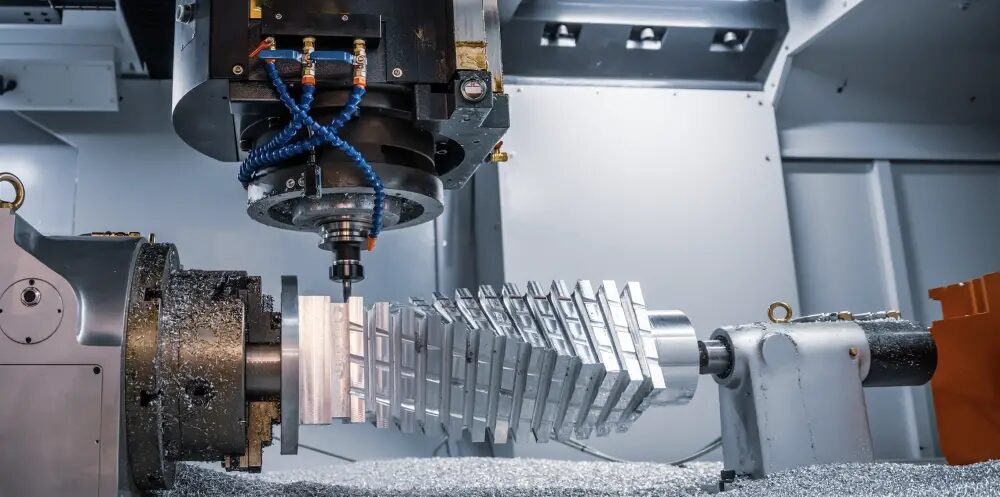
In today’s fast-paced global economy, manufacturing is undergoing a powerful transformation. What was once heavily dependent on manual procedures and generalized machining methods has evolved toward advanced, precision-oriented techniques that deliver higher quality, reduced waste, and faster throughput. As industries like aerospace, medical devices, and automotive push the limits of product performance, machining technology and the processes surrounding it play a vital role in meeting these exacting standards.
At the heart of this shift is the universal demand for greater accuracy, tighter tolerances, and more reliable parts production — all of which are essential to competitiveness in an era where customers expect flawless performance. While traditional CNC machining has made great strides over the last few decades, emerging techniques such as Swiss machining are pushing the boundaries further, especially where long, slender, or highly detailed parts are required.
One notable example of advanced machining application can be seen in Swiss machining services, which have grown rapidly within precision manufacturing circles due to their ability to produce complex geometries with minimal runs and high repeatability. These methods lend themselves well to components that are critical to both function and safety in sectors like medical implants and high-end electronics.
For manufacturers seeking world-class execution, partnering with providers that specialize in services such as these — for example, the tailored capabilities offered through Swiss machining services — has become a strategic priority.
The Role of Precise Machined Components in Modern Production
Manufacturing today is not merely about making products; it’s about ensuring parts perform consistently under stress, fit precisely into assemblies, and meet regulatory standards without compromise. This requires components that are not only dimensionally accurate but also structurally reliable throughout their lifecycle.
Precision machined components have become the backbone of countless industrial applications. Their influence extends from safety-critical aerospace parts to high-performance automotive systems and beyond. As industries tackle ever more demanding engineering challenges, the role of precision machining continues to expand.
There are a few key reasons why this technology has become so essential:
- Complexity Meets Capability – Modern CAD and CAM systems enable designs that were previously impractical, and high-precision machinists turn these designs into reality without sacrificing efficiency.
- Material Versatility – Whether working with aluminum alloys, stainless steel, titanium, or exotic composites, precision machining allows for consistent results across a wide range of materials.
- Repeatability – Once the process is dialed in, thousands of parts can be produced with near-identical specifications, which is critical for high-volume production and quality assurance.
- Customization and Small Batches – Rapid prototyping and bespoke manufacturing models thrive because precision machining can adapt quickly without costly tooling or long lead times.
Through these attributes, precision machining supports agile manufacturing strategies that respond to industry demands for both customization and scale.
How Machining Trends Are Influencing Global Supply Chains
As global manufacturing networks evolve, machining trends are influencing broader aspects of production ecosystems. Consider the shift toward localized supply chains: as customers demand faster delivery and lower inventory risk, machining suppliers with robust, geographically diverse networks become invaluable.
Companies that excel in precision machining often serve as strategic partners rather than mere vendors. They are integrated into product development cycles early, assisting with manufacturability analyses, tolerancing recommendations, and design adjustments that ultimately reduce costs and improve performance.
Further, automation and digital integration have turned traditional machining centers into intelligent systems capable of real-time monitoring, predictive maintenance, and adaptive control. These improvements do more than enhance productivity — they also tighten integration with enterprise planning systems and supply chain analytics.
Sustainability and Efficiency in Modern Manufacturing
With heightened awareness of environmental impact, manufacturers are increasingly committed to sustainability initiatives. Machining processes are a key player in this effort, as material efficiency and energy use are critical components of a company’s environmental footprint.
Innovations such as high-speed machining and advanced tool path optimizations not only reduce cycle times, they also minimize waste. Precision machining reduces the reliance on secondary finishing processes and rework, contributing to lower energy consumption and reduced scrap.
In this context, the conversation is shifting from “how do we make parts?” to “how do we make parts responsibly?” — and precision machining is central to that evolution. Companies increasingly rely on Swiss machined components to maintain high quality while supporting sustainable manufacturing processes.
Conclusion: The Future of Machining in Manufacturing
The manufacturing landscape will continue to change, driven by advancements in technology, customer expectations, and global economic pressures. Machining — especially when executed with precision and adaptability — remains one of the most impactful processes shaping modern production. From prototyping to full-scale production, precision components ensure that products not only meet specifications but also outperform in real-world conditions.
As industries progress toward smarter factories and leaner supply chains, machining expertise will be an indispensable asset. By embracing both the capabilities and potential of methods like Swiss machining and precision component manufacturing, companies can drive innovation while delivering exceptional performance and reliability.